
Events
Colloquia, thesis defenses, symposia and departmental events at the Department of Mechanical Engineering.
8 events Clear filters
October 2026
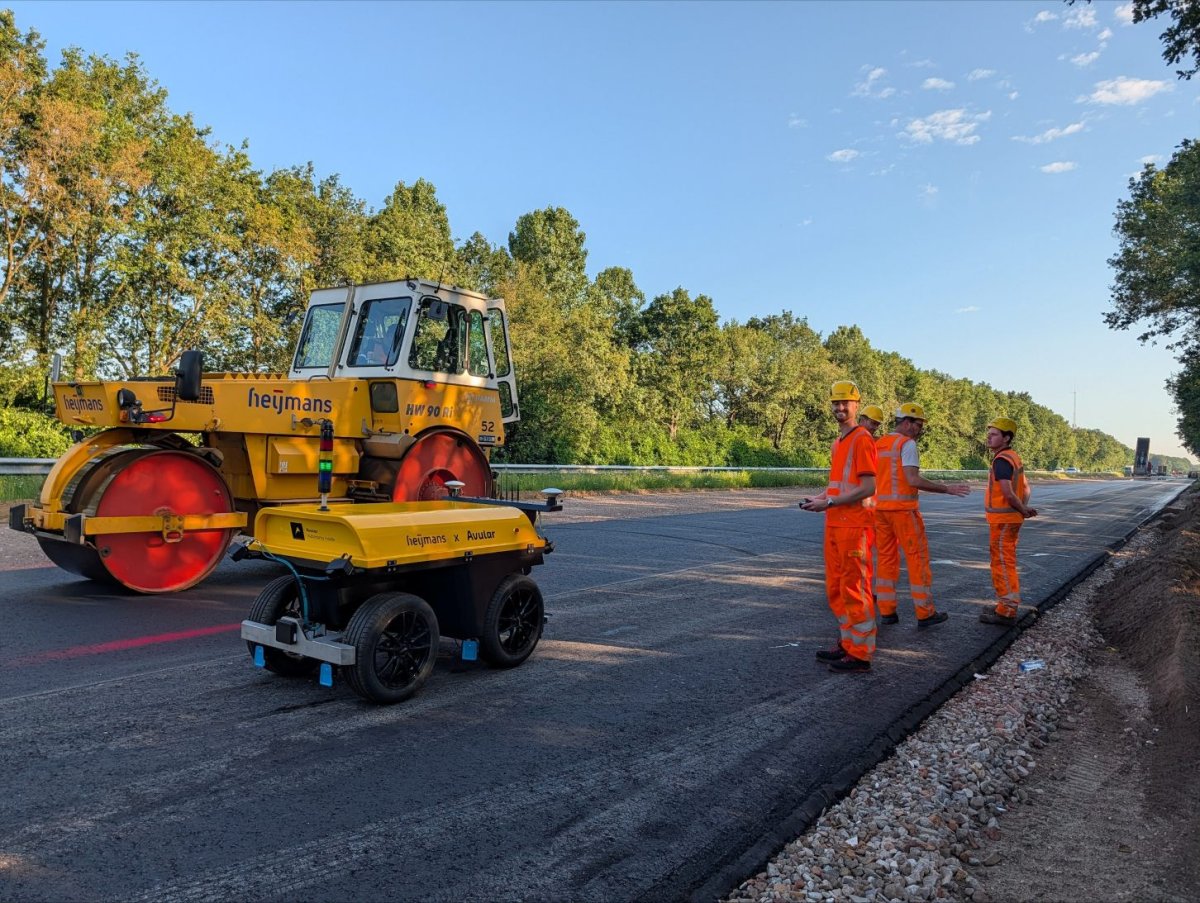
Development, Implementation, and Experimental Validation of a Model Predictive Controller for an Autonomous Road Roller
This thesis presents the development and experimental validation of a Model Predictive Controller (MPC) for autonomous road rollers. The controller aims to improve path-tracking accuracy while accounting for vehicle dynamics and actuator constraints. Its performance is evaluated through simulations and real-world experiments and compared with an existing Pure Pursuit controller. The results demonstrate the potential of MPC for accurate and reliable autonomous road compaction.
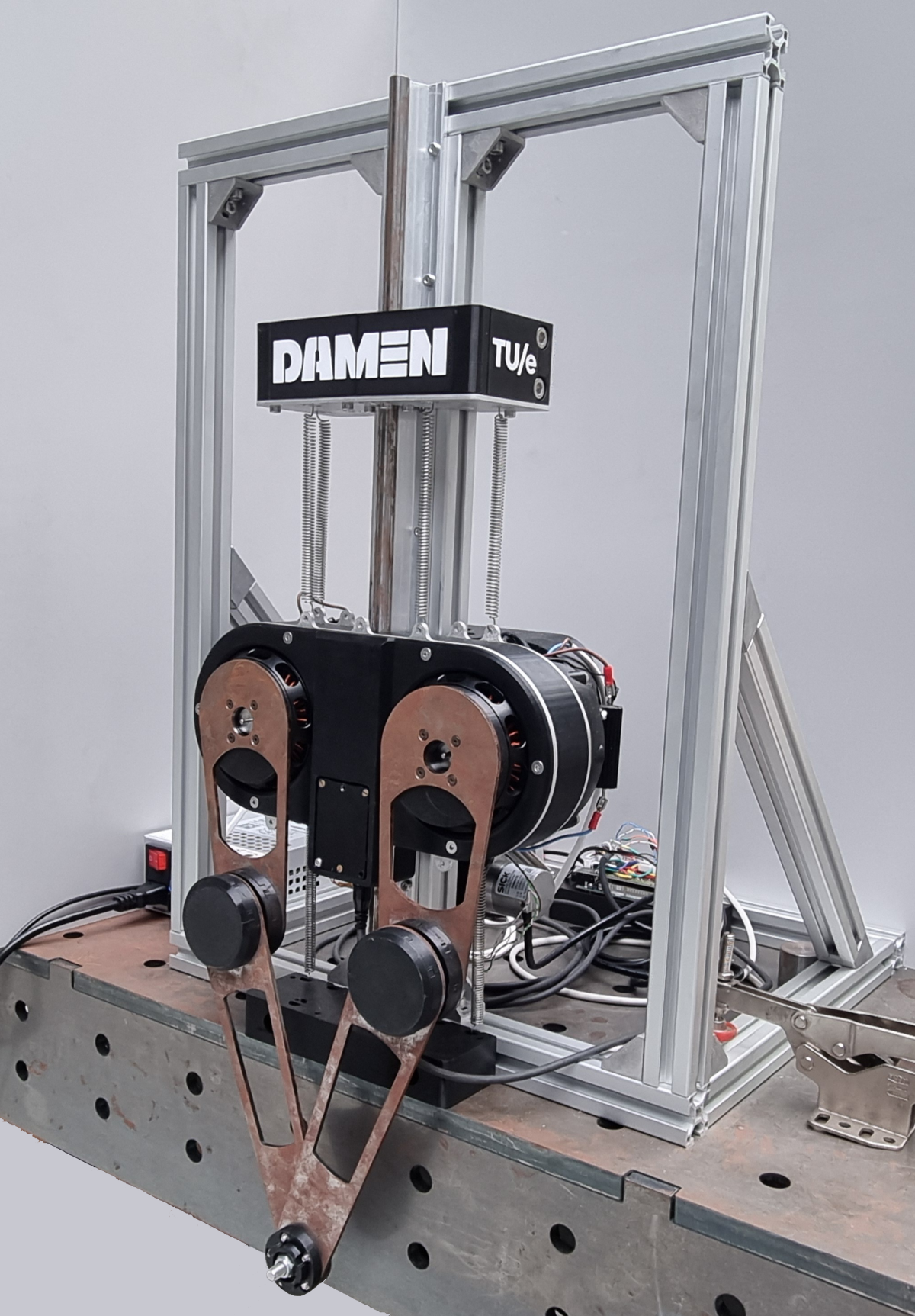
Motion and Vibration Control of a Robot on a Compliant Support
This thesis investigates control strategies for improving the accuracy of a welding robot mounted on a compliant support. The research is motivated by robotic welding applications in shipbuilding, where in the future robots can be positioned using boom-like structures. Vibration and movement of the support structure can however compromise welding accuracy. To study this problem, a five-bar robot with a single vertical compliant degree of freedom was developed as an experimental setup. Analytical modelling, multibody simulation, and physical experiments were used to examine the influence of mechanism mass, support stiffness, and trajectory duration. In this way, four control strategies were evaluated: encoder-based base-motion compensation, IMU-based acceleration feedforward, zero-vibration input shaping, and zero-delay input shaping. The results show that structural compliance increases world-frame tracking error, particularly when the commanded motion excites the dominant structural mode. Encoder-based compensation provides the most consistent improvement, while acceleration feedforward has a limited effect. Input shaping reduces vibration at the cost of increased movement time, whereas zero-delay input shaping preserved the original duration but is sensitive to operating conditions. Overall, the results show that tracking accuracy can be improved using the robot’s existing actuators, although the achievable improvement depends on the system dynamics, trajectory, control delay and sensors.
An Exactly Constrained Machine Architecture for Overlay Improvement in Large-Area Roll-to-Plate UV Nanoimprint Lithography
Compensating position-dependent imperfections at their physical origin: a data-driven framework for a 6-DOF infinite-rotation stage
Thermometry by laser-induced fluorescence of molecular oxygen in iron flames
Accurate combustion simulations are indispensable to further advance the development of metal fuels and these require validation through experimental data. Currently the particle temperature can be measured reliably, but this is only half of the story. The concept of laser-induced fluorescence of molecular oxygen is therefore investigated to measure the other half: the temperature of the gas. This is not trivial, since excitation requires light in the deep ultraviolet (190 – 210 nm) and metal particles reflect laser light very efficiently, which obstructs part of the fluorescence signal. In this work, the operation and performance of the diagnostic technique is examined and improved, and it is investigated how measurements can be performed in iron flames effectively.
Remnant Control for High-Precision Piezo-Actuated Positioning Systems
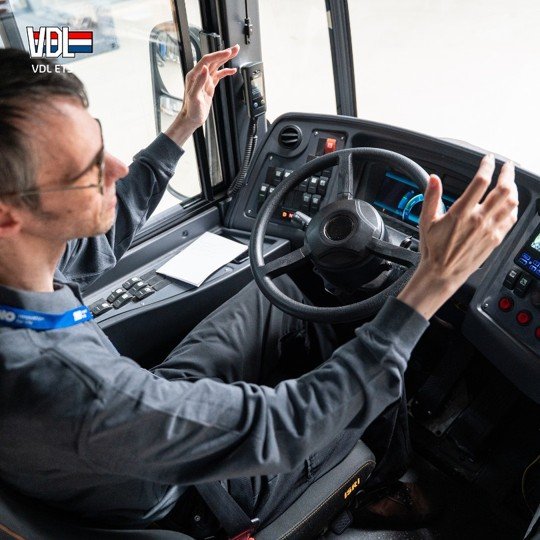
Ego Trajectory Prediction for Autonomous Vehicles Using a Dynamics-Residual Hybrid Model
This work presents a hybrid trajectory prediction model for autonomous buses, in a yard-manoeuvring use case (<15 km/h). A hybrid residual model (HM) is used, where an analytical model (AM) is combined with a data-driven model (DM), in this case an LSTM. In this method, the AM provides an initial estimate of the bus's yaw rate and lateral velocity, and a DM learns to correct the residual error of that estimate. A high-fidelity multi-body simulation is used as ground truth for training, where it is excited using a random-phase multisine. The HM's objective function includes both velocities and position, thereby encouraging both physically plausible and accurate trajectories. Additionally, two differing complexities of AMs are used to investigate whether a more complex AM lets the HM predict trajectories more accurately. Over 10 separate training runs, numerical results show that the HM is 94 % more accurate than both baseline AMs in an unseen test-set, and that the different complexities in AMs do not make a significant difference in absolute accuracy. The HM using the more complex AM is found to have larger training-validation gap compared to the HM with the less complex AM.