Developing a realistic longitudinal driver model based on logged vehicle data
Speaker
Joris Wijnands
About this event
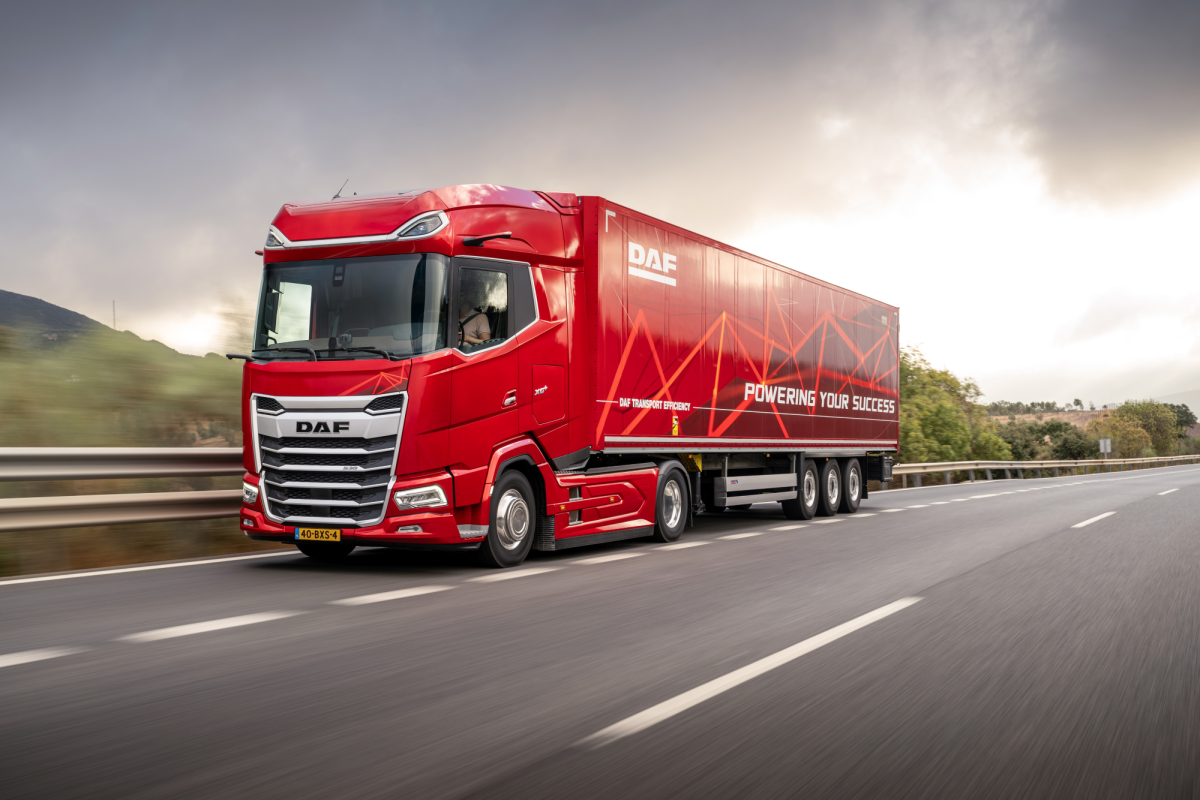
Longitudinal vehicle simulations commonly rely on reference speed tracking models to represent driver behaviour. While this is effective for reproducing a specific trip, this approach limits the applicability of simulations to previously driven routes and does not necessarily include realistic driver decision making behaviour. The objective is therefore to develop an event-based driver model capable of simulating realistic, average driver behaviour for an arbitrary route and operates without a predefined reference speed signal. To achieve this, a drive-cycle analysis has been performed on a large dataset of real-world truck driving data. The analysis identifies characteristic driver behaviour in response to cornering, stopping, downhill and legal speed limit events. Based on these findings, an event-based driver model was developed that detects, prioritizes and processes multiple event types in parallel, allowing the vehicle to anticipate upcoming route characteristics and select the appropriate driving and braking strategy. Verification of the individual event types and the integrated model demonstrates that event detection, prioritization and brake mode selection function according to the defined design requirements. Validation against logged vehicle data and an existing driver model shows improved realism in braking behaviour and event anticipation. The largest deviations from observed driving behaviour are found in cornering speed selection and legal speed limit compliance, primarily due to simplifying assumptions derived from the drive-cycle analysis. The results demonstrate that real-world drive-cycle data can provide sufficient information to develop an event-based driver model that reproduces key aspects of realistic truck driver behaviour. Furthermore, the developed approach enables simulation of previously unseen routes without requiring predefined reference speed profiles, providing a foundation for future, driver-independent, vehicle simulations."
Host