
Events
Colloquia, thesis defenses, symposia and departmental events at the Department of Mechanical Engineering.
14 events Clear filters
December 2026

Bayesian Uncertainty Quantification for Nonlinear Constitutive Modeling in Engineering
Constitutive models play a central role in engineering analysis by mathematically describing material behavior. Combined with conservation laws, they provide a mathematical model for the behavior of engineering systems. Unlike conservation laws, constitutive relations can be affected by significant uncertainties arising from imperfect knowledge of material behavior, experimental variability, and model simplifications. A goal of this doctoral research is to develop Bayesian methodologies for the calibration, selection, and uncertainty quantification of nonlinear constitutive models, thereby improving the reliability and interpretability of engineering predictions. This research is founded on Bayesian inference as a framework for solving inverse problems in constitutive modeling. Within this framework, unknown model parameters are represented by probability distributions that are updated using observations. This approach enables the systematic combination of prior knowledge and measurement data while providing rigorous quantification of uncertainty in model parameters and predictions. Markov Chain Monte Carlo (MCMC) sampling techniques are employed to characterize posterior distributions and assess predictive uncertainty in a statistically consistent manner. A first research line investigates the practical application of Bayesian inference to constitutive modeling problems in engineering. Specifically, it investigates the performance and computational efficiency of MCMC algorithms used for posterior exploration. Through experimental case studies in heat conduction and rheology, different sampling approaches are evaluated in terms of convergence, accuracy, computational effort, and reliability. This work provides practical guidelines for the application of Bayesian calibration methodologies to constitutive models with varying levels of complexity and computational cost. A second research line focuses on nonlinear heat conduction, where material properties depend on temperature. A Bayesian calibration framework has been developed to infer temperature-dependent thermal conductivity from transient or regime measurements. The methodology combines uncertainty quantification with adaptive refinement of both numerical discretization and constitutive model complexity. By linking model refinement strategies to measurement uncertainty and statistical model-selection criteria, the framework achieves accurate parameter estimation while preventing overfitting and unnecessary computational expense. The proposed methodology has been validated using both synthetic and experimental datasets and enables identification of nonlinear thermal constitutive behavior together with credible intervals as uncertainty bounds. A third research line investigates the integration of goal-oriented finite element methods with surrogate modeling techniques for efficient Bayesian inference. The proposed framework exploits information contained in the likelihood function to guide adaptive numerical discretization. To further reduce computational cost, multi-output Gaussian process surrogate models are employed to approximate the forward problem while preserving predictive uncertainty. The combination of goal-oriented discretization, surrogate modeling, and Bayesian inference aims to enable efficient estimation and uncertainty quantification of constitutive models in computationally demanding engineering applications. More broadly, this thesis investigates Bayesian uncertainty quantification for constitutive models across multiple engineering domains, including heat transfer, rheology, and electromagnetism. The developed domain-independent methodologies enable probabilistic calibration, model validation, and uncertainty propagation for nonlinear and history-dependent material behavior. The results demonstrate that Bayesian methods provide a rigorous framework for constitutive modeling, yielding both parameter estimates and quantified confidence in model predictions. By integrating experimental data, physical modeling, and uncertainty quantification within a unified probabilistic framework, this research contributes methodologies that support more reliable and trustworthy engineering simulations of complex material systems.

Human-Guided Robot Task and Motion Adaptation through Demonstrations, Language, and Physical Corrections
Robots are increasingly deployed beyond traditional industrial settings, extending their use to homes, hospitals, agriculture, and other everyday environments. In these applications, robots must perform diverse tasks under varying conditions while accounting for user preferences and expectations. Traditional robot programming is effective for repetitive tasks, but it may be insufficient when robot behavior must adapt to end-user needs and safety concerns. This motivates intuitive human-robot interaction methods that allow users to guide, correct, and personalize robot behavior without programming expertise. The first part of this thesis addresses this need through learning from demonstration (LfD), which enables non-expert users to teach robot tasks without explicit programming. While many LfD approaches focus on reproducing demonstrated motions or task sequences, demonstrations can also implicitly convey why particular objects are selected. To capture this intention, we propose a keyframe-based method that infers task goals from object-attribute constraints. During demonstrations, the system records the robot state, object poses, and object attributes, and identifies object-centric keyframes based on meaningful environmental changes. It then extracts constraints over discrete and continuous object attributes across and within demonstrations. These constraints represent the semantic rationale behind the user’s object choices and are used during reproduction to select suitable objects in new environments. In this way, the robot can generalize demonstrated tasks to novel scenes and unseen objects while preserving the user’s intended object-level semantics. Although demonstrations can teach the robot what task to perform, the resulting motion may still conflict with the user’s preferences or safety expectations. Natural language offers an intuitive way to correct robot motion, such as asking the robot to move slower or keep a larger distance from a fragile item. However, existing low-level correction methods often treat feedback as environment-specific and mainly focus on unconditional corrections that specify only the desired motion change. Some corrections are valid only under specific conditions; ignoring these conditions may cause unnecessary detours or overly conservative behavior. Conditional corrections therefore introduce an additional challenge because they specify both what the robot should do and when the correction should be applied, as in “stay away from the open book while carrying a full cup.” The second part of this thesis therefore represents such corrections as reusable user preferences. A fine-tuned language model converts each correction into a structured preference, which is stored in memory and later selected based on the current scene and robot state. The selected preferences are activated over relevant trajectory segments and converted into constraints to generate corrected motion in new environments. While natural language corrections are semantically informative, they may lack precise physical grounding about the desired motion change. In contrast, physical corrections provide direct geometric information but can be semantically ambiguous, as the same intervention may reflect different intentions. The third part of this thesis exploits these complementary modalities to construct and refine structured task-and-motion plans. Verbal cues clarify the semantic target of the correction, while physical interaction grounds the correction in the robot’s motion, allowing the model to infer the corresponding update to the task-and-motion plan. The plan is represented as a sequence of task-level objectives, such as grasping or placing an object, together with motion-level preferences between consecutive objectives. A transformer-based model conditions the current multimodal feedback on the previous plan to support both plan construction and incremental revision. We compare two architectures that differ in how the previous plan is incorporated.
January 2027

The turbulent premixed bluff body stabilized ammonia/hydrogen/nitrogen/air flame - A fundamental study for gas turbine combustor regarding extinction and molecular transport effects under different NH₃/H₂ ratios
The gas turbine is a promising energy supply solution for AI data centers, attributed to its advantages regarding stable, high-power capacity, and fast startup. To get rid of the dependence on fossil fuel and mitigate the emission, renewable fuels produced by redundant green electricity, such as ammonia and hydrogen, become candidates of gas turbine fuel options to replace natural gas and other fossil fuels. Partially cracked ammonia has the advantages of both ammonia and hydrogen; thus, it is regarded as a potential fuel to be used in gas turbines. To mimic the flame within the flow field in practical gas turbine combustors, a bluff-body-stabilized flame is selected as the configuration to study the stretch flame behavior in the recirculation zone. Blow-off (extinction) is one of the most important challenges within the combustor, especially the near blow-off conditions are required for controlling emissions. Figuring out the principle of the bluff-body stabilized partially cracked ammonia flame blow-off is the main purpose of this study. Starting from the most simplified flame extinction process, a one-dimensional twin counterflow premixed flame is first studied to exclude the influence of turbulence, three-dimensional flow field, and flame surface wrinkling. By increasing the strain rate, the flame is first enhanced when pushing towards. The final extinction is caused by incomplete combustion when reactants have not enough space and time to react. With a fixed equivalence ratio, a non-monotonic change of the dimensionless extinction strain rate with ammonia cracking ratio is found. By isolating the preferential diffusion effect and non-unity Lewis number effect, the preferential diffusion effect has proved to be the reason for the non-monotonic change. To accurately predict the blow-off of the bluff-body-stabilized partially cracked ammonia flame, a numerical method with Large Eddy Simulation, detailed chemistry, and a conjugate heat transfer model is established. The simulation result is validated by experiment regarding the flow field and flame distribution. With the validated numerical method, the extinction of two ammonia/hydrogen flames is predicted within the experimental error bar, and the blow-off processes are analyzed. For the 70% NH₃ flame, the continuous shear layer flame surface prevents the thermal convection between the hot burnt gas inside the recirculation zone and the cold unburnt. The blow-off of the 70% NH₃ flame starts from the local extinction along the shear layer flame and causes the shear layer flame breakup. With the breakup, the mixing at the shear layer dominated by turbulent vortices cools down the recirculation zone and makes the flame kernels not sustainable, and the flame finally extinguishes. In comparison, the 40% NH₃ flame is more fragmented than the 70% NH₃ flame during the stable stage. Due to the absence of the continuous shear layer flame surface, the blow-off bulk velocity of it is lower than the expected value, which is based on the one-dimensional extinction strain rate ratio of these two flames.

Entropy Regularization for Control and Estimation
```Control and estimation for stochastic dynamical systems concern the synthesis of input policies and the reconstruction of state information from measurements. Entropy provides a quantitative description of the randomness present in system trajectories, disturbance models, and belief distributions. The main contribution of this thesis is the development of entropy-regularized methods for stochastic control and estimation. This involves topics such as dynamic programming, formal abstractions, and recursive Bayesian filtering. The central contribution concerns entropy-regularized control of continuous-state stochastic systems through finite abstractions. Existing abstraction methods enable formal controller synthesis for objectives such as cumulative costs and temporal-logic specifications. Entropy-based trajectory objectives do not transfer through these abstractions directly, as discretization changes the entropy of the induced trajectory distribution. This thesis derives bounds relating the Kullback-Leibler (KL) divergence to uniform of a continuous trajectory distribution to that of its finite discretization. These bounds enable formal entropy-aware controller synthesis for continuous-state systems, trading cumulative cost against trajectory predictability while retaining guarantees for the original system. A second contribution concerns robust stochastic control. It generalizes KL-regularized robust-control formulations by allowing adversarial disturbance distributions to be regularized through both cross entropy with respect to an empirical model and the entropy of the adversary itself. The resulting dynamic-programming recursion gives rise to the minsoftmax algorithm and places minimax, stochastic, KL-regularized, and H-infinity type viewpoints in one parameterized formulation. A third contribution concerns Bayesian filtering. The tempered Bayes filter modifies the recursive Bayesian update by tempering the distributions that define the posterior. This yields a computationally efficient modification of the Bayes filter that can improve predictive performance under model mismatch. Specializing the construction to the linear Gaussian setting yields the tempered Kalman filter. Two further papers are included as supporting material. The entropy-regularized interval Markov decision process work supports the continuous-state abstraction chapter. The optimal stopping work is included as a thesis appendix outside the main entropy-regularization arc.```
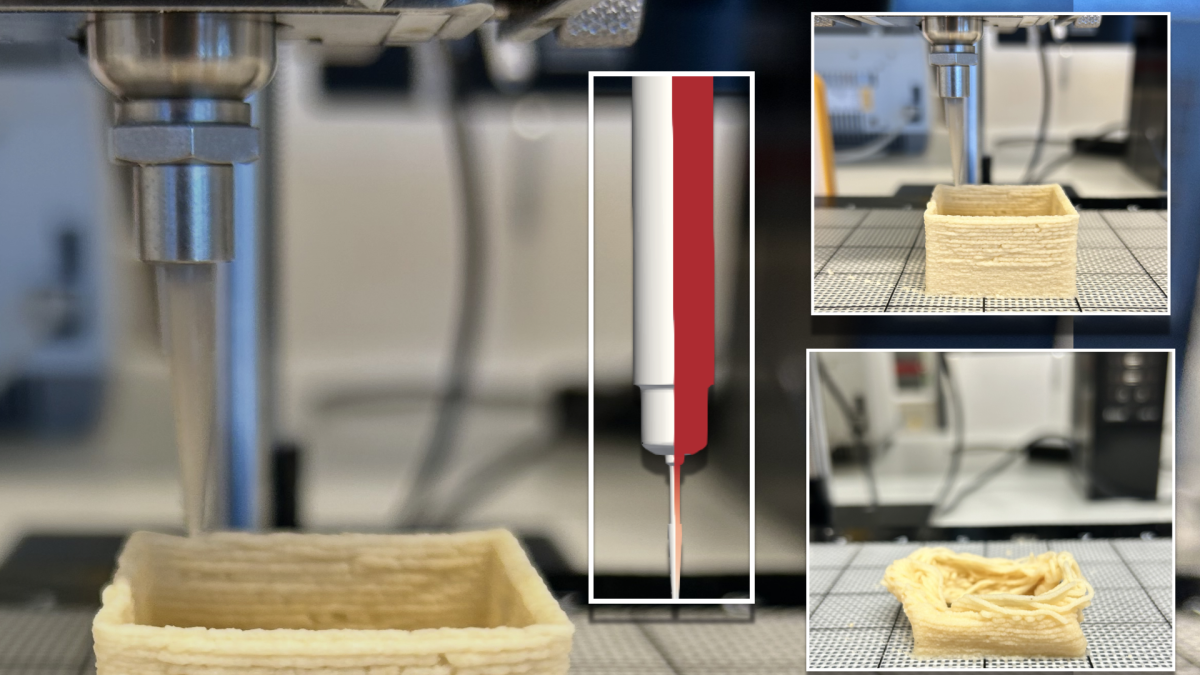
Rheology and Extrusion of Personalized Food Inks for 3D Printing
What if foods could be designed specifically for your nutritional needs, taste, and texture preferences? This thesis focuses on how extrusion-based 3D food printing could help make personalized nutrition a reality. We investigated how the composition and flow properties of food materials influence their extrusion response, aiming to reduce the need for trial and error. By combining food science, rheology, material modelling, and computer simulations, we have developed an approach to understand predicting the extrusion response of various formulations. The research provides new insights into the link between nutritional composition and extrusion behaviour, bringing us one step closer to designing foods that can be tailored to individual needs.

Simulation-Optimization Approaches for the Co-Design of Electric Transportation Systems
Electric transportation systems are central to reducing emissions from passenger transport and logistics, but their wider deployment is constrained by high upfront costs and the difficulty of maintaining reliable operations in real-world conditions. A fundamental tension underlies these challenges: infrastructure and vehicles must be designed for the operations they will face, yet operational strategies can only be defined once a system is designed. Because these decisions are highly interdependent, treating strategic, tactical, and operational choices sequentially leads to suboptimal outcomes. The natural resolution is co-design: jointly optimizing the system design and operation. This thesis investigates, develops, and validates co-design as a unifying framework for electric transportation systems, combining optimization and simulation to couple infrastructure sizing, vehicle design, and operational control across maritime, road freight, airport ground operations, and passenger-vehicle domains. Across these domains, co-design consistently outperforms separate design-then-operate approaches. Jointly optimizing ferry schedules, charging infrastructure, and battery sizing reduces total system cost relative to current practice. In road freight, centralized co-design of charging station locations and operational policies lowers average cost, reduces total installed charging power, and eliminates queuing. For airport ground support, smarter charging control simultaneously improves service levels and reduces both charger and fleet requirements. In energy support systems, simulation-based co-design of energy management and hybrid storage for charging stations yields more robust long-term designs. At the vehicle level, concurrent family design produces more competitive portfolios, though gains depend strongly on the market segments targeted. In all cases, simulation is key to reveal how operational realism shapes which designs perform well in practice and whether gains in reliability and cost are actually realized, albeit at the cost of higher modeling complexity. The overarching finding is that electric transportation systems become more implementable, cost-effective, and reliable when design, operations, and uncertainty-aware evaluation are treated as a unified problem. Achieving this requires optimization and simulation to be used together under a co-design paradigm to support realistic decision-making and accelerate the deployment of electric transportation systems.
February 2027

Evolutionary Equilibria in Mean Field Games: Theory and Applications to Token Economies
Modern societies increasingly rely on shared infrastructures such as transportation networks, energy systems, cloud platforms, communication channels, and other resources whose value depends on how many users access them at the same time. When users act selfishly, the resulting allocation is often inefficient from a societal perspective. Classical mechanism-design solutions address this problem through monetary prices or tolls. Yet money can compromise fairness, because access then depends on wealth. Fairness is especially delicate when users belong to different classes with different needs or constraints, since a desirable allocation may intentionally favor those who are worse off. An appealing alternative is to use non-tradable tokens that users earn and spend when accessing resources. Such token economies can promote turn-taking. Users alternate between more and less favorable outcomes, allowing efficiency and fairness to be reconciled over time. This thesis develops the theoretical and design foundations for such token-based mechanisms in dynamic resource allocation problems. The choices to be priced are not necessarily isolated resources; they are combinations of resources that many agents use repeatedly over time. For example, a traveler may choose a path consisting of several road links, and the travel time of that path depends on the congestion of each link. The design problem is therefore to determine token tolls for combinations of resources so that the collective behavior induced by individual choices leads to fair and efficient long-run outcomes. To address this problem, this thesis models token economies as continuous-time stochastic dynamic games with finitely many boundedly rational agents. Each agent has an individual state, namely the number of tokens in their wallet, and repeatedly chooses actions from the set of resource combinations available to satisfy their needs. These decisions are made according to policies, which map individual states to actions. They affect the agents' future states and shape the aggregate congestion experienced by the population. Because real users cannot be expected to know the full game, compute equilibria, or behave as perfectly rational optimizers, the thesis adopts an evolutionary-game-theoretic perspective. Evolutionary models replace strong rationality assumptions by simple myopic revision protocols: rules by which agents occasionally revise their policies based on currently perceived payoffs. This is a natural level of behavioral detail for large populations. Crucially, the relevant question is not only which outcomes are equilibria, but also whether such outcomes can emerge and persist under plausible behavioral dynamics. The first part of the thesis develops a new evolutionary theory for continuous-time finite-state stochastic dynamic games of many players. A mean-field approximation is introduced and shown to approximate the finite-population game with strong guarantees as the population grows. This approximation makes it possible to study the joint state-policy distribution of the population through a deterministic ordinary differential equation induced by simple evolutionary revision rules. The thesis shows that standard equilibrium concepts for this class of games lack an evolutionary interpretation, because they do not allow individual heterogeneity in the policies used by the players. To overcome this limitation, a new solution concept is introduced: the mixed stationary Nash equilibrium. It admits an evolutionary interpretation and exists under mild conditions. Moreover, for broad classes of meaningful revision protocols, mixed stationary Nash equilibria coincide with the rest points of the proposed mean-field evolutionary dynamics. The thesis then studies their evolutionary stability, establishing conditions under which population trajectories approach (or remain close to) the set of mixed stationary Nash equilibria. This gives equilibrium a design-relevant meaning: if a game is constructed so that a desired population state is a mixed stationary Nash equilibrium, the theory provides tools to show that this state can emerge and persist against strategic deviations. The second part of the thesis applies this theory to the design of token economies for fair and efficient dynamic resource allocation in congestion games. Three performance objectives are considered. Intra-class fairness requires users with the same needs to experience the same long-run average reward, independently of individual factors such as wealth. Inter-class fairness concerns how rewards are distributed across different user classes, for instance to favor classes that are worse off. Efficiency aims to maximize the societal utility of the resources, such as the average reward of the whole population or environmental performance. The design problem is then formulated as the choice of token tolls that guarantee intra-class fairness while optimizing a prescribed trade-off between inter-class fairness and efficiency. The thesis shows that intra-class fairness holds for any choice of tolls, establishes existence and essential uniqueness of the mean-field equilibrium resource flows, and shows convergence of the token economy to a neighborhood of equilibrium from any initial condition. Finally, it derives closed-form integer tolls that induce an equilibrium at the desired optimal trade-off between fairness and efficiency. Altogether, this thesis bridges mechanism design, evolutionary game theory, and control engineering to provide a principled framework for dynamic resource allocation without money. Its main contribution is twofold: it develops a new evolutionary equilibrium theory for continuous-time finite-state dynamic games, and it uses this theory to design token economies whose long-run behavior is fair, efficient, and can emerge robustly under boundedly rational behavior.

Electric Airport Co-Design and Operations
In an effort to reduce the carbon emissions of aviation and its reliance on fossil fuels, manufacturers and start-ups around the world are looking into alternative propulsion technologies, and first initial electrically powered aircraft are already being certified. As electric aviation progresses towards maturity, airport and aircraft operators must prepare charging infrastructure to enable electric flight networks. Lessons learned from the introduction of electric vehicles show that limited availability of charging infrastructure presents a major bottleneck in the early stages of adoption. Furthermore, the electrification of heavy-duty vehicles such as buses and trucks showed that adaptations in the operation may be required to optimally integrate these new vehicles. The installation of charging infrastructure may be a major challenge; even small aircraft for regional use cases will require charging powers that can overwhelm many regional airports and necessitate energy system upgrades. These upgrades range from placing charging stations on the apron to major grid connection upgrades once the technology reaches a certain level of maturity. At the same time, airports can and are making use of their vast premises to install solar panels and stationary batteries, which currently helps reduce their electricity costs, but may also provide valuable energy provision capabilities for aircraft charging in the future. This thesis presents methodologies for optimizing the installation process of charging infrastructure and future electric aircraft flight operations in the wake of the ongoing energy transition. First, we present a framework for how to best incorporate initial electric aircraft purchases into existing flight schedules that would then be operated by a mixed fleet. We address the fact that the energy consumption of electric aircraft is governed by weather conditions, routing, and other factors and as such can be subject to some uncertainty that is often hard to quantify. Therefore, we propose a distributionally robust approach to the fleet assignment problem, where a Wasserstein ambiguity set around samples from previous flights or simulations is used to inform decisions on which flights to assign to the electric aircraft in the fleet. As a first insight, we show that these flight assignments with their resulting fuel savings and the existence of charging infrastructure are closely connected, and that the amount of electric aircraft in the fleet and electrified airports in the network impose bottlenecks on each other in terms of fuel-saving potential. Furthermore, the choice for the radius of the ambiguity set has a profound impact on which routes the electric aircraft are employed on and which flight sequences are possible: We find that schedules can be made robust against out-of-sample realizations of the flight energy consumption without significant compromise in fuel savings when compared to more optimistic flight assignments. Next, we show how daily adjustments to an electric flight schedule can help reduce airport grid energy requirements by making use of their local renewable energy resources. Results show that shifting flights into favorable times can achieve complete grid independence in some cases, which may be interesting for very remote airfields. But even small departure time readjustments and flight reassignments can improve the energy management: An online implementation of the framework reveals that a flexible aircraft routing that adapts to changes in energy conditions can reduce or shift grid energy requirements. Finally, we investigate the potential of vehicle-to-grid in airport parking lots to aid in charging larger electric aircraft. We efficiently model the charging dynamics of a large vehicle fleet with partial differential equations and compute the optimal energy management for a scenario where most intra-European flights of one airline are electrified. The results show that airports could use the energy buffering capabilities of the vehicles parked on their premises to enable fast turnaround times for the aircraft by supplying high charging powers without straining their grid connection or compromising customer vehicle readiness. We also highlight the cost-saving potential of this approach, both by shifting grid energy demand in time locally through the energy buffer, but also spatially by charging at airports that are located in different electricity markets.
Phase-based piecewise linear control with applications to motion systems
March 2027
Reduced order modeling and Bayesian inference for complex fluid flows
Numerical simulation of two-phase bubbly flow - From sub-grid modeling to high-fidelity simulation
Two-phase gas-liquid flows are common in nature and industrial applications. In water-cooled nuclear reactors, coolant boiling can produce two-phase flows during both normal operation and accident scenarios. Numerical simulations enhance reactor safety by complementing experiments, enabling detailed analysis of small-scale phenomena and complex systems that are difficult to study experimentally. In this thesis, two numerical approaches for two-phase flows are investigated. The first is sub-grid modeling, where two-phase structures are modeled without resolving the interface. The second is high-fidelity simulation, where the interface shape and evolution are resolved exactly. To address remaining challenges in this complex field, this research aims to advance the development of numerical methods and tools for two-phase flows, both for low-fidelity and high-fidelity CFD. For sub-grid modeling, this thesis focuses on developing and validating LogMoM, a population balance model tracking bubble size distributions in space and time. Source terms accounting for bubble coalescence and break-up were derived and added. Additionally, a new momentum equation for the transport velocity of an arbitrary statistical moment was implemented to capture size-dependent bubble motion. Implemented in OpenFOAM, LogMoM was verified against 0D analytical solutions and validated against literature models in bubbly pipe flows, demonstrating accurate predictions at reasonable computational cost. For high-fidelity simulation, this thesis presents Briscola, a two-phase CFD solver developed at NRG PALLAS. The solver was extended with key features: an FFT-based pressure solver to accelerate simulation times, an immersed boundary method for complex geometries, and a coalescence suppression method to prevent artificial numerical coalescence. After verification against established single- and two-phase benchmarks, Briscola was successfully applied to simulate a bubbly cross-flow and compared with experimental data.
April 2027
From microstructure to mechanical response of poly(ether-ether-ketone)
Molecular insights into the oxidative ageing of polymers
May 2027

Development of a digital microfluidic platform for biomedical and optical sensing applications
This PhD research focuses on the development of digital microfluidic (DMF) platforms for biological and optical sensing applications. The first chapter presents a perspective review on the full-stack design of DMF platforms for optical biosensing, with emphasis on chip architecture, droplet handling, sensor integration, optical readout, and system control. The second chapter focuses on the microfabrication of a multilayer DMF architecture on glass substrates, in which the electrode and routing layers are vertically connected. This architecture enables larger electrode arrays while maintaining narrow gaps between adjacent electrodes. The chapter also investigates multilayer dielectric stacks based on silicon nitride and parylene C and introduces a safety factor to evaluate the operating margin between droplet actuation and dielectric breakdown. Cell-response experiments are performed as a proof of concept to demonstrate the use of the fabricated chips for biological applications. The third chapter addresses the sustainability and reusability of DMF chips through surface regeneration. A regeneration process is developed in which the dielectric and hydrophobic layers are removed and redeposited while preserving the underlying electrode arrays, the most fabrication-intensive parts of the chips. This enables individual DMF chips to be regenerated and reused over multiple cycles. The regenerated chips are evaluated through systematic surface and electrical characterization, followed by fluorescence-based TNF-α detection using magnetic beads to evaluate their performance in a biological assay. The fourth chapter integrates photonic crystal sensors into DMF chips for real-time label-free optical sensing. The hydrophobicity of the photonic crystal surfaces is optimized to provide a compatible interface for both electrowetting and optical sensing, and an optical setup is developed for real-time measurements during controlled droplet handling. The integrated chips are evaluated using different ethylene glycol concentrations, with real-time sensing based on refractive-index changes. The fifth chapter builds on this integrated platform and focuses on selective label-free TNF-α sensing. The photonic crystal surfaces are functionalized for specific TNF-α binding, while DMF is used for controlled droplet handling during real-time sensing experiments.