Phase Transition of CO2 in a Control Valve for Carbon Sequestration
Speaker
Ilse Mateman
About this event
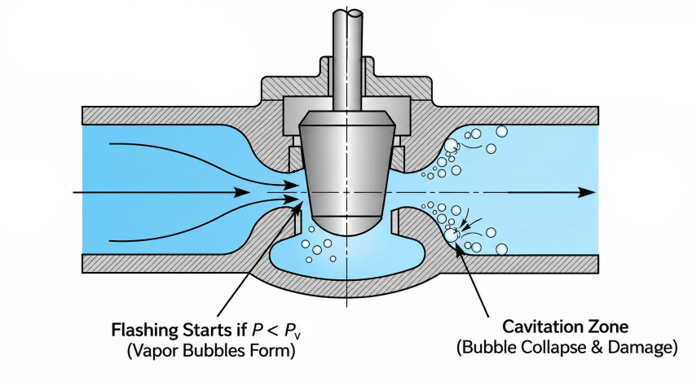
While the industry transitions from fossil fuels to renewable energy, carbon sequestration is an option to minimise the release of greenhouse gases into the atmosphere. Carbon Capture and Storage (CCS) projects aim to capture carbon dioxide (CO2) from industry and store it in a reservoir. Between the transport pipelines and these reservoirs, such as depleted undersea gas fields, rapid depressurisation occurs. In this study, the flow of supercritical CO2 undergoing depressurisation through a control valve is investigated. The processes are simulated using Ansys Fluent in two dimensions. Steep gradients in thermodynamic properties are present near the critical point of CO2, making transcritical simulations challenging. Therefore, the problem is simplified by approximating the geometry of the control valve as a converging-diverging nozzle. The simulations in Ansys Fluent are performed with the mixture multiphase model. The thermodynamic properties of CO2 are modelled using a user-defined function and a user-defined real gas model. These functions provide a tabulated Span-Wagner Equation of State (SW-EoS). Turbulence is included with an SST k-ω model. In the simulations, a focus is placed on comparing the Zwart-Gerber-Belamri (ZGB) and Lee mass transfer models to model vapour generation and collapse. Mass transfer coefficients are tuned to experimental pressure data from Nakagawa et al. Using the Lee model, the experimental depressurisation was replicated slightly better. Also, the mass flow rate calculated with the Lee model lies closer to the experimental measurements than the mass flow rates from the ZGB model. The difference between the models is small, however, and both models contain coefficients that are tunable. Particularly the condensation coefficient is tuned with uncertainty, as few data points are available after the onset of condensation. Full confidence in the simulation results was not gained, as a mesh dependence study found no converging mass flow rates when refining the mesh. Further investigation on mesh refinement and alternative methods of determining the mass transfer coefficients could provide more insight.
Host