Numerical Investigation of Hydrogen Pre-Chamber Combustion: A Comparison of Turbulent Combustion Models Across Operating Conditions
Speaker
Max Chen
About this event
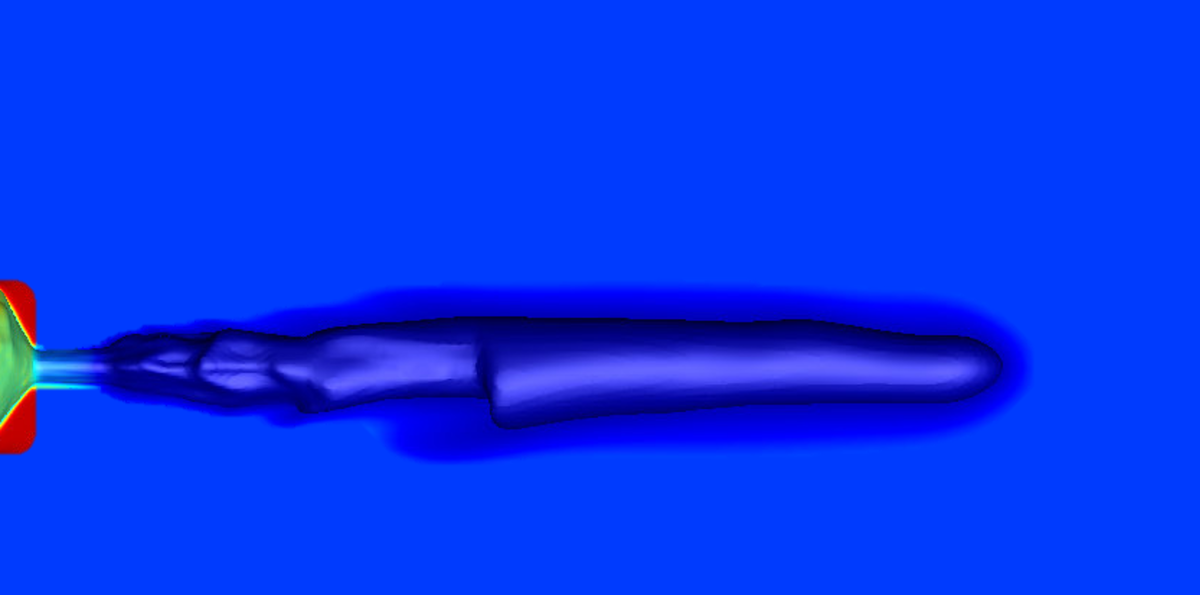
Hydrogen-fueled internal combustion engines are a promising route to decarbonizing heavy-duty transport, but the high reactivity of hydrogen requires lean operation, which in turn needs a robust ignition source. Active pre-chamber turbulent jet ignition provides such a source, yet numerical studies of pre-chamber combustion usually rely on a single turbulent combustion model, leaving the sensitivity of the predictions to the choice of model unexplored. Moreover, simulated and measured OH* chemiluminescence are rarely compared on an equivalent, line-of-sight basis. In this work, a hydrogen-fueled active pre-chamber in an optically accessible constant-volume combustion chamber is simulated using RANS in CONVERGE with two combustion closures: the SAGE detailed chemistry solver and the flamelet-based G-equation model, applied with an identical domain, mesh and turbulence model. Both are validated against experimental data at initial pressures of 10–30 bar and pre-chamber air-fuel equivalence ratios of 0.8–1.2. To compare with the line-of-sight measurements, the simulated OH* field is projected using a forward Abel transform. The G-equation model reproduces the pre-chamber flame propagation to within approximately 0.05 ms, as well as the jet penetration and morphology. Its timing error originates in the ignition and early flame kernel phase. SAGE over-predicts the combustion duration, consistent with the absence of turbulence–chemistry interaction in its source terms, but reproduces the shape, extent and timing of the OH* signal once time is normalized to the hot jet exit. Ground-state OH, inaccessible to the present diagnostics, persists in the combustion products and penetrates considerably further into the main chamber than OH*. OH* chemiluminescence therefore marks the instantaneous reaction zone but underestimates the extent of the reacted region. Combustion of the jet-borne hydrogen in the air-filled main chamber is found to be incomplete in all cases.
Host