Statistical Modeling of Methanol Dual-Fuel Engine Behavior using Design of Experiments
Speaker
Rick Kapelle
About this event
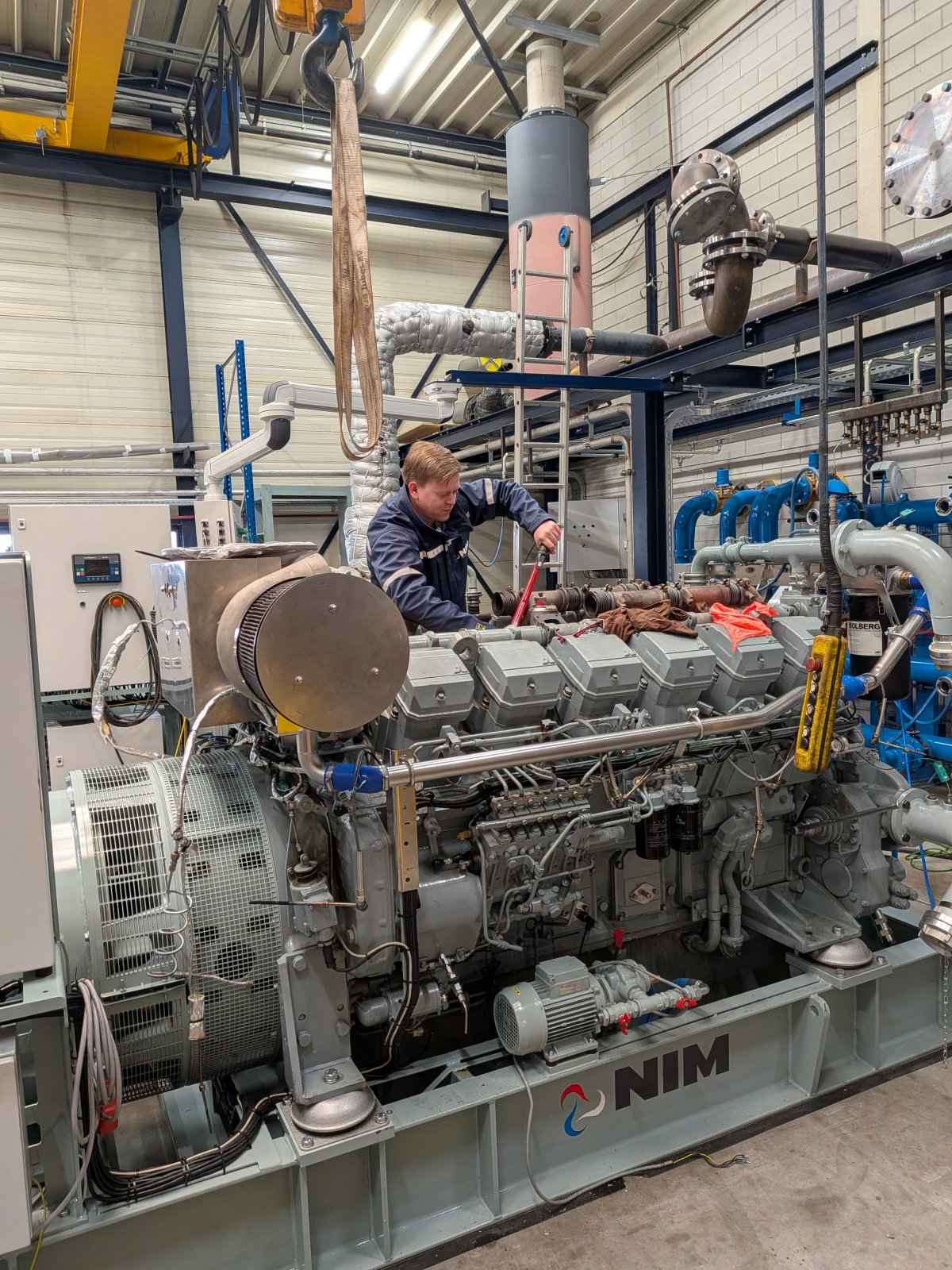
In the search for alternative fuels and combustion methods, research is being done to adapt highspeed diesel engines for methanol operation using dual-fuel retrofit systems, but the effects of operating conditions on engine performance and achievable methanol substitution require systematic characterization. This study develops statistical regression models for a Mitsubishi S6R diesel engine equipped with the methanol dual-fuel retrofit system of the Nederlandse Innovatie Maatschappij. A three-factor Box-Behnken design with 15 experimental runs was applied. Engine speed, diesel injection timing, and engine load were varied. For each operating point, the maximum achievable energy-based diesel replacement ratio (DRR) was established subject to combustion-stability constraints. DRR was then included as a covariate when modeling brake efficiency, exhaust gas temperature, and lambda, and was treated as a separate response when modeling maximum achievable replacement. Second-order polynomial models were fitted by least squares and reduced using coefficient significance tests, analysis of variance, adjusted coefficients of determination, and residual diagnostics. The final models achieved adjusted R² values of approximately 0.97–0.98 for the experimental data. Brake efficiency generally increased with engine load and advanced injection timing, while increasing engine speed reduced efficiency. Exhaust gas temperature increased with load and DRR and decreased with more advanced injection timing. Within the investigated range, the maximum achievable DRR was predicted to be highest at high load, low engine speed, and advanced injection timing. The calculated lambda response exhibited linear and nonlinear relationships; however, part of its modeled sensitivity to engine speed and DRR arises from their mathematical relationship with the lambda calculation. The resulting models quantify relationships between operating conditions and engine responses and provide a basis for future operating-point optimization. Further investigation is required to assess prediction accuracy outside the tested operating range.
Host